


Note: This article discusses the European Hedgehog and how you can help them if you live in Europe. 🙂
Hedgehogs are prickly interesting 🦔
I really love our European hedgehog and can still clearly remember the first time I encountered one. When I was about 6 years old, I went on an evening walk with my father during a vacation. It was dusk, and suddenly we spotted the hedgehog. It spotted us too and immediately turned into a prickly ball.
It was the strangest thing, as I'd never seen an animal do something odd like that before. Then my dad explained to me that hedgehogs curl themselves up when they feel threatened. They turn their spiky backs toward the danger to prevent predators from eating them. My six-year-old self thought that was pretty clever of them.
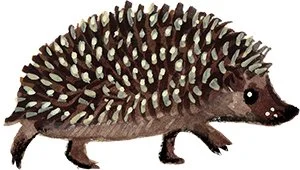
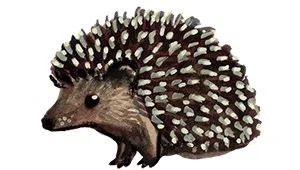
Fun Hedgehog Facts
Did you know that:
-
... a grown-up hedgehog has about 7000 to 8000 spines?
-
... the name hedgehog came into use around 1450 and is derived from the Middle English heyghoge? Heyg meaning ‘hedge’ (because you can often find it in and among hedges), and hoge comes from ‘hog’, thanks to its pig-like snout (plus they can be loud and make pig-like sounds when they’re eating).
-
... they have poor eyesight, but make up for it with their well-developed sense of smell and sharp hearing?
-
... hedgehogs are the gardener's best friend? They eat the plant-eating insects, especially snails. So having a hedgehog roaming your garden is always good news.
-
... they can eat up to 40 snails in only one night? (and they're LOUD while eating them, haha)
-
... that they travel an average of 1 to 2 km (0.6 to 1.2 miles) in a single night? (Sometimes even more.) That's quite a distance for such a small animal.
-
... hedgehogs hibernate? They do wake up from time to time, and when they do, they go in search of food or to find a warmer spot if the winter is too cold.
-
... our European hedgehog was brought to New Zealand by British settlers in the 1870s to remind them of their homeland?
- ... the European hedgehog is classified as 'Vulnerable to Extinction' in several European countries. The IUCN (International Union for Conservation of Nature) marked them as 'Near Threatened'.
A vulnerable species
Unfortunately, hedgehogs aren’t doing very well.
In different parts of Europe, and particularly in the Netherlands, their population is declining at an alarming rate.
Although it used to be quite common to find a hedgehog in your yard at dusk, seeing one is becoming somewhat rare. In the Netherlands alone, the hedgehog population has dropped by 50% in just 10 years.
As a result, the hedgehog is now red-listed as a vulnerable or near-threatened species in Europe.
The Cause in a Nutshell
- While our cities continue to expand, hedgehogs (along with other animals) are being forced to make way for new neighborhoods and roads.
There is simply less space for them to live, and as a result, there is also less food available. Many hedgehogs are starving. - Nowadays, many people use leaf blowers to clean their yards and sidewalks. This kills many of the insects that live among the leaves. These insects are an important food source for hedgehogs, birds, and other small animals.
- Many hedgehogs die from agricultural and horticultural pesticides that pollute water and soil and cause many diseases among the population.
- Increased traffic results in an average of 135,000 casualties per year.
🚗 🚙 🚕 🏎🚗 🚙 🚕 🏎🚗 🚙 🚕 🏎🚗 🚙 🚕 🏎🚗 🚙 🚕 🏎🚗 🚙 🚕 🏎🚗 🚙 🚕 - The use of (automatic) lawn mowers also claims many victims. Hedgehogs are often not fast enough to get away from such a machine with blades.
You can help them with your garden
Here are six simple tips you can try in your garden this fall. You may be able to make a difference.
1) Leave a layer of leaves on the ground.
There’s a whole little world hidden beneath that layer of leaves. Hedgehogs and insects find food and shelter there. The worms, spiders, and insects eat the leaves and break them down into compost.
BONUS: The compost is free and naturally fertilizes your garden while improving the soil structure. As a result, your plants will grow and bloom better than ever when spring arrives.
2) Don't buy or use a LEAF BLOWER
Just use a leaf rake and/or a broom.
(And… your neighbors will probably appreciate the reduction in noise).
Why?
In short: a leaf blower is bad for the environment. Unless they’re electric, these machines produce a lot of harmful emissions. With their wide sound range of about 120 decibels, they cause significant noise pollution and stress for both people and animals. And more importantly, they damage and disturb the small creatures living beneath all those layers of leaves.
Of course, fallen leaves from your evergreen plants need to be removed. And if you don’t fancy breaking your ankles, you’ll have to clear them off the sidewalks and paths too, or course. But better use a rake or a broom instead.
BONUS: Buy a broom that’s made from birch twigs! Seriously, it’s a great item to have for the garden.
Last year, I bought one of these brooms from Mr. C. Brink from Berkenbezems.nl .
He had a booth set up in Doesburg (NL) during the ‘Hanzedagen', and these brooms really make a world of difference. They’re perfect for sweeping up leaves and small debris from the garden grounds, and they pick up much more than a regular bristle broom.
Online, you can often find these types of brooms listed as “witch’s broom” or “Halloween broom.”

3) But where do you put all those dead leaves?!
You can rake the leaves together and add them as thin layers over your flower beds where you planted your bulbs for Spring. These layers provide perfect insulation for the flowers during the winter. You can rake excess leaves into a pile under a table or next to a trash can, where they won’t be in the way or pose a slipping hazard. Another option is to create a messy corner in your garden. These piles can become a suitable winter shelter and food source for hedgehogs, insects, and other garden creatures. Just place them where they won’t bother you too much. It will be worth it.
4) Create a hedgehog highway in your yard (and ask your neighbors to join in).
A hedgehog highway is fairly easy to set up if your garden fence allows it. It’s a series of holes in or under fences and walls that allow hedgehogs to pass freely between yards, parks, and community gardens.
Of course, it’s even more fun if the whole neighborhood works together.
Here’s a link to a website that explains in a few simple steps how you can build your own highway. I didn’t want to cut a hole in our new garden fence myself, but I knew that hedgehogs had already been in the garden and that they simply crawl underneath it where there is more room between fence and ground.
I’ve even created a few extra spots now where they can get through now. It only needs to be 13 by 13 cm.
BONUS: Did you know you can buy fun little metal highway gates to decorate your garden? Here, here, and here are a few fun examples. But of course, any handy person can make one themselves. (It could be a fun project to create a hedgehog portal with your kids.)
5) You can feed the hedgehogs, but be careful what you give them.
What not to give:
- You can help hedgehogs by offering them some food and water, but remember: NEVER give them milk. 🥛 All hedgehogs are lactose intolerant. Diarrhea causes dehydration and, in the worst case, can even lead to their death.
- DO NOT give a hedgehog any fruits or vegetables. Hedgehogs are carnivores, and their physiology is most similar to that of a cat. They mainly eat insects, small reptiles, and even carrion. They might eat fruit or vegetables when food is scarce, and there’s truly nothing else available to them, but it’s not very healthy for them to do so.
- DO NOT leave out (dried) mealworms, peanuts, bread, or bread with peanut butter for them. This is actually very bad for them and, just like milk, can cause serious health problems.
Wat you can do:
- You make hedgehogs happy with fresh water. Place a small bowl in the yard and don’t forget to change the water every now and then.
- Because hedgehogs are so similar to cats in terms of physiology, you can feed them cat food, such as kitten kibble. Place a bowl of kibble or a bowl of wet food for them in the garden.
- There’s also special hedgehog food available. You can find it at various garden centers, pet stores, and online, but make sure it comes from a reputable organization.
Extra tip: Worried that neighborhood cats will eat all the food? Then check out this website and create a Hedgehog Cafe.
6) What to do if you find a litter of hedgehogs in your yard
It happened to my neighbor, and it was incredibly cute to watch.
But as cute as it is to find a nest, it’s best to leave them alone as much as possible. And no, those little ones haven’t been abandoned by their mother. The mother hedgehog will only return once you’re no longer around. Only if you’re 100% certain that the mother has left the nest should you could intervene by taking the baby hedgehogs to a hedgehog rescue center, for example.
Those were the 6 tips.
Would you like to take it a step further?
You’re awesome! Here’s the final bonus tip.
Do you have enough space in your garden? How about adding a hedgehog house?
You can buy them ready-made, or you can build one together with your (grand)children. There are lots of handy templates online to help you with that. But for your convenience, I’ve already collected a few at the bottom of this blog post under “resources.”
(Just scroll down to the end of this page.)
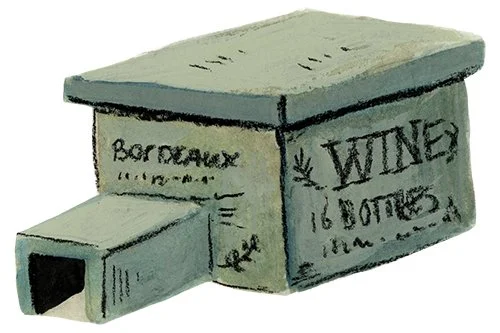
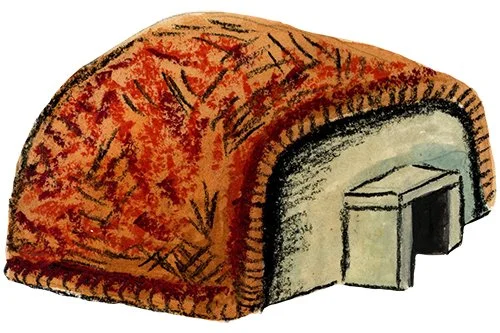
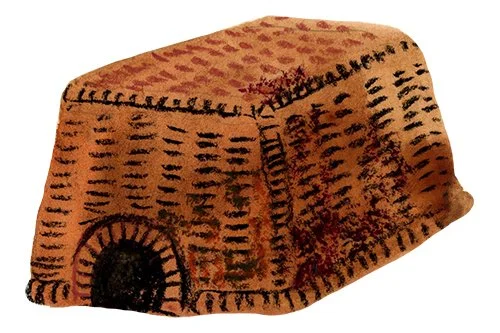
Here are the different hedgehog houses available for purchase:
1) a ready-made wooden house
2) a ready-made wooden house with a (thatched) roof for extra insulation.
3) a simple wicker house*
*The wicker houses, which resemble a rush basket, are a bit cheaper and a good imitation of a hedgehog’s natural nest, but they often require a little extra work to add insulation.
It’s best to place a plastic sheet over it and then cover it with a layer of soil, some leaves, twigs, and other natural materials. This provides the insulation the hedgehog needs during the colder periods of the year, and it gives them a warm and safer place to crawl into. Keep in mind that this type of house will deteriorate after a few years.
A few practical tips for setting up a hedgehog house in your garden::
DO's: 👍 🦔
- Place the house on dry ground.
- Choose a quiet spot in your garden. Location is key.
-
Prevent cold winter winds from blowing inside. Make sure not to position the opening facing north or northeast.
-
If necessary, cover the house with plastic sheeting and add some soil, twigs, and leaves for extra insulation.
As explained earlier, this is actually a must for thatched houses because they let in drafts. For ready-made houses, it’s optional. You can use these materials to camouflage them a bit. -
Add some straw and dry leaves to the inside of the house, but don’t stuff it too much. Hedgehogs will also gather these materials themselves to create a perfectly comfortable shelter.
DON'Ts: 🦔 👎
-
When building a hedgehog house, do not use creosote-treated wood or wood treated with non-water-based products. Treated wood like that emits toxic fumes that linger for a long time and can be very harmful to hedgehogs and other animals. If you’ve built the house yourself, it’s best to treat the wood with a water-based varnish.
-
Cleaning the house isn’t strictly necessary, but if you want to clean it, it’s best to do so in late March or early April. Some female hedgehogs may have their young in the house during the spring. You can clean the house later using warm water and a brush to scrub it.
-
Leave the house alone if a hedgehog is still living in it. If you want to be sure the hedgehog house is no longer occupied, first make a small hole in the layer of straw at the entrance. If this hasn’t been moved by evening, there may no longer be a hedgehog inside.
🔍 Links & resources
English links 🇺🇸🇬🇧
About Hedgehogs
· Hedgehog Street - Hedgehogs after dark
· Wikipedia - hedgehogs
· BrdBx - Are hedgehogs endangered in the UK? What the Red List says 2026
· IUCN - hedgehog red list
Hedgehog highway
· The guardian - Hedgehog highway
· Homeandroost - How to make a hedgehog highway
Build a hedgehog home:
· British hedgehogs - hedgehog homes
· The Wildlife Trusts - How to build a hedgehog home
· Wildelife trusts - How to build a hedgehog home
· Hedgehog Cafe (cat proof)
Leaf blowers:
Leave leaves alone - Don’t blow, mow!
Dutch Links 🇳🇱
(You could always use a translation website if you're curious)
About the hedgehog:
· Natuurmonumenten - De Egel
· Natuurmonumenten - Red de Egel
· Het leven van de Egel
· Egelbescherming - Het bijvoeren van de Egel
About the Hedgehog Highway
· Natuurmonumenten: Maak een egelsnelweg
· NOS - Door de snelweg van Merel (23) kunnen egels veilig van tuin naar tuin (2019).
Making a Hedgehog Home:
· Natuurmonumenten - Zo maak je een egelhuis
· Egelbescherming - plaats een Egelhuis (pdf)
· Egelvoederplek (waar de kat niet bij kan).
· Bouw een egelhuisje - Gardener's World
Buying a Hedgehog Home:
· Vivara
· Intratuin
· Tuinadvies
· Vogelhuisjes.nl
(of gebruik je zoekmachine)
Leaf Blowers
· Animals today - Bescherm de vogels, dump de bladblazer
· Vogelbescherming - leve de blaadjes, ban de bladblazer
· Gardeners' World Magazine- Stop met bladblazen
Add comment
Comments